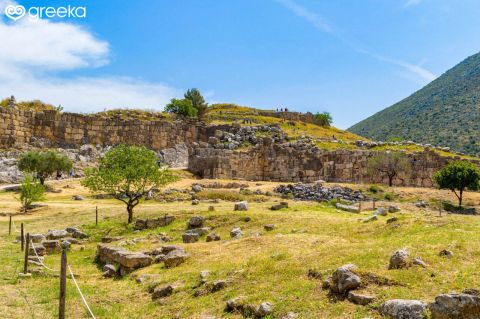
The stone architecture of Mycenae is unique in its kind, influenced by many civilizations like the Minoans in Crete. The archaeological excavations which began during the second half of the 19th century brought to light important architectural remains from the Mycenaean civilization including palaces, fortresses, settlements and burial monuments. The Mycenaean fortresses that lie on top of the rocks dominate the surrounding area, encircled by the strong walls. Of high interest are the palaces which are built in prominent locations and constitute building complexes and cobbled yards.
The characteristic Mycenaean tombs are also an important part of its architecture, the most famous being the tomb of Agamemnon (the Treasury of Atreus) which is in the form of a tholos. Nearby are other tombs, possibly Agamemnon ancestors. One of the distinctive features of the Mycenaean architecture is the very large stone blocks which characterize the brilliant fortification structures like the fortifying walls of the Acropolis, the Lion Gate and the Cyclopean walls (the myth says that they were constructed by the Cyclops).
The architectural abilities of this civilization extended beyond constructions, as they included many improvements on the roadways and waterworks system. The legendary architectural works of Mycenae are unique in the world and still have a tremendous impact on the history of Greece.
We use cookies to offer you a better browsing experience and to analyze site traffic. By browsing this site you agree to our use of cookies. Learn more about our cookies policy