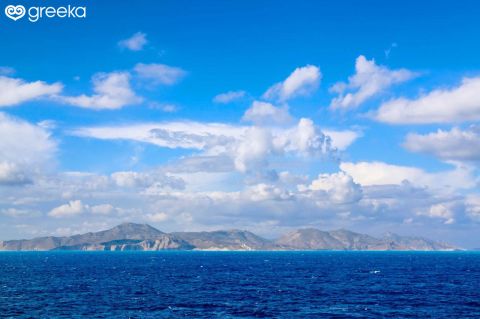
According to Greek mythology, Kos is the sacred land of Asclepius, the god of healing. Archaeological findings prove that the history of Kos starts from the prehistoric times. The Minoans settled on the island around the 14th century BC, followed by the Achaeans and, a few centuries later, the Dorians came and built the ancient city of Kos. The Persians conquered the island of Kos during the 5th century BC but were defeated by the Athenians who took control of the island during the battle of Salamina. 460 BC is the year during which Hippocrates, the father of Medicine and founder of the first School of Medicine, was born.
After his death in 357, the inhabitants of Kos built the sanctuary of Asklepeion honoring Hippocrates and the god Asklepios. It was used as a hospital, welcoming patients from all over the Mediterranean, with doctors who applied the therapeutic methods of Hippocrates. During the Peloponnesian War (431-404 BC), Kos was an ally of Athens. That is why the island had to pay a high tribute when the Spartans invaded it in 411 BC.
In 394 BC, Kos became again an ally with Athens and democracy was introduced on Kos. This period was characterized by cultural, educational and economic growth. In 335 BC, the island of Kos became a part of the Macedonian Empire. After the death of Alexander the Great, his successors the Ptolemies took control of the island and of the rest of the Dodecanese. The Byzantine period brought prosperity and wealth on Kos, unfortunately, threatened by the constant pirate raids of which the most dangerous were the attacks of the Saracens.
Kos became a part of the Eastern colony of the Roman Empire after 82 BC. In 1204 AD, the Venetians occupied the island of Kos. The Knights of Saint John, who established on Rhodes, also took the control of Kos in 1315 AD. A century later, they built the superb fortress that stands today at the entrance of the harbor of Kos as well as the Castle of Antimachia. In 1522, the Turks took the island and held it until 1912, when the Italian troupes invaded Kos and expelled them. The disastrous earthquake of 1934 almost destroyed the whole island. The Germans replaced the Italians in 1943. The German occupation was a very dark period for the inhabitants of Kos who endured great suffering and deprivations. The nightmare ended in 1945 when Kos came under British rule. Finally, in 1948, Kos got united to the rest of Greece.
We use cookies to offer you a better browsing experience and to analyze site traffic. By browsing this site you agree to our use of cookies. Learn more about our cookies policy