Athens Acropolis Museum
• General info • Tours & Activities • Map • Members Photos (123) • Greeka Photos (9) • Reviews (1)
Location: Acropolis
Don't miss: Museums guide (free admission dates and other useful info)
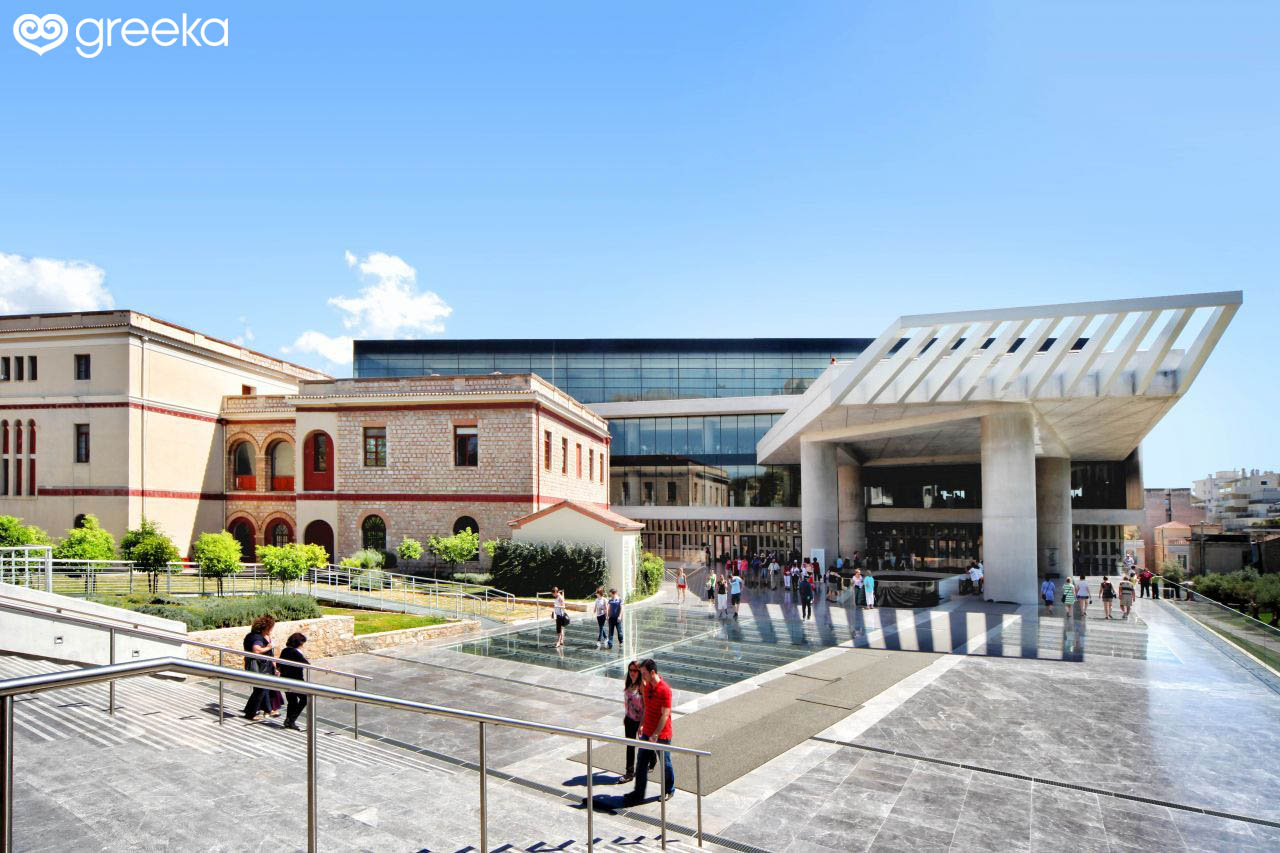
The Acropolis Museum of Athens is located on the beautiful Dionysiou Areopagitou Street in the picturesque area of Makriyianni (or the Acropolis Neighborhood), only 300 meters away from the Acropolis.
It was built in order to house the vast exhibits found during the excavations on the Sacred Rock as there were too many from a point onwards to fit in the former Acropolis Museum, which was situated next to the Parthenon.
Except for findings unearthed from the Acropolis, the museum also exhibits items from other excavated archaeological sites around the Attica peninsula, such as the temple of Artemis in southeast Athens.
SKIP THE LINE! ACROPOLIS AND MUSEUM ENTRY TICKETS!
Skip the long queues and explore the Acropolis and the Acropolis Museum at your own pace.
Buy your tickets online!
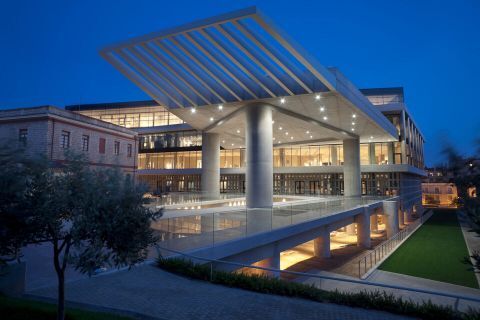
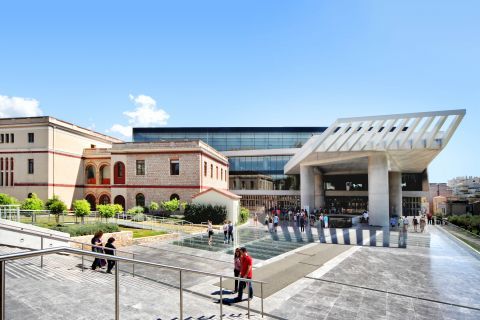
The museum was designed by the New York-based architect Bernard Tschumi in cooperation with the Greek architect Michael Photiades.
Although it took many years to finish this project (discussions about it started in 1975), the museum was finally inaugurated in June 2009.
The funds for its construction reached 130 million euros and were provided by the Greek State and the European Regional Development Fund.
The total area of this building is 23,000 square meters, with 14,000 being the exhibition area. It is divided into three main floors and two intermediate levels.
An interesting feature of the museum is the extensive use of glass inside and outside this building.
All the artifacts recovered from the excavation site date back to the Greek Bronze Age, the Roman Times and the Byzantine Era.
Top Tours and activities
-
![Skip the line! Acropolis Museum Ticket with Audio guide 1]()
Skip the line! Acropolis Museum Ticket with Audio guide
Book nowfrom € 15.00Category: City2 hours MapVisit the New Acropolis Museum, founded in 2009 to exhibit all major finds from the Sacred Rock and its foothills. Divided into 4 main galleries, the collections feature items formerly held in other Greek museums and returned from foreign museums.
-
-10.00%
Special Offer: 10.00% discount for early booking (-60 days).
![Sightseeing tour with Acropolis museum 1]()
![Sightseeing tour with Acropolis museum 2]()
![Sightseeing tour with Acropolis museum 3]()
Sightseeing tour with Acropolis museum
Book nowfrom € 66.60Category: City4 hours MapThis tour allows guests to visit the Acropolis and the New Acropolis Museum after passing by some of the most impressive and interesting sights around the city!
-
![Full-day Athens tour with Cape Sounion 1]()
![Full-day Athens tour with Cape Sounion 2]()
![Full-day Athens tour with Cape Sounion 3]()
Full-day Athens tour with Cape Sounion
Book nowfrom € 137.00Category: City, Day Trips1 Day MapDo not miss out on this incredible full-day tour of Athens, which includes visits to the Acropolis, the New Museum of Acropolis, the otherworldly Cape Sounion, and a lunch break in between!
Floors
Level 0
On the ground floor, visitors will encounter exhibits found on the slopes of the Acropolis.
The hall housing these exhibits is long and rectangular in shape and imitates the ascending path on a rock.
Here, there are various objects and remains of buildings from the settlements dating back to the Neolithic period, from 3000 BC to the 6th century AD, and ancient sanctuaries dedicated to the gods Dionysus and Asclepius.
Level 1
The first floor presents findings from the Archaic Period, marble statues used as decorative pieces and various gifts dedicated to the goddess Athena, the protector of ancient Athens.
The hall in which these objects are kept is a large trapezoidal hall.
In addition, visitors will see the Parthenon gallery, where sections of marble structures from the Temple of Parthenon have been kept for display.
This gallery is totally made out of glass enabling natural light to fall on the displayed items.
Sculptures from the Propylaea, the temple of Athena Nike and the Erectheion are exhibited on the first floor, too.
The five Caryatids of the Erechtheion and the statue representing Athena adjusting her sandal from the Temple of Athena Nike rank among the most impressive sculptures hosted in the museum.
There are also some interesting exhibits, like the colossal head of Goddess Artemis Vravronia, sculptures from the classical period and different types of gifts contributed to the Acropolis during the Roman period.
The gifts included portraits of emperors, philosophers, gods, warriors, and athletes, among others.
Level 3
The top floor houses the most impressive part of the museum - the beautiful frieze of the Parthenon presented in its original form.
Unfortunately, some pieces of the frieze are missing but archaeologists and special artists have managed to create copies of them.
Almost half of the Parthenon's frieze is kept in the British Museum in London. Lord Elgin, a Scotch diplomat, sawed and removed several parts from the ancient monuments of the Acropolis in the early 19th century, transferred them to Britain and sold them to the British Government. In fact, this is one of the main reasons why this museum was created; to put pressure on the British Museum to return the Elgin Marbles back to Greece.
Other Floors
On Level -1, visitors can admire an archaeological excavation that has revealed an ancient neighborhood built at the southern foot of the Acropolis. According to archaeologists, this neighborhood had houses, streets, workshops, tombs and baths. Today, part of them can be seen under the museum.
As for Level 2, it has no exhibits but hosts the restaurant, the reading area, the bookstore, as well as a multimedia center of the museum.
Good to know
Accessibility
As the museum aims to offer the best experience possible to all its visitors, it has also catered for being accessible to guests with disabilities.
The entrances of the museum feature special ramps for wheelchair users, while an elevator and toilets for people with limitations are available on every level. Wheelchairs can be lent at the Information Desk (Ground Floor).
In addition, guides written in Brailles are available in Greek and English.
Of course, guide dogs can enter the museum for free.
Families with Children
Children usually get bored at museums, especially if they are little. However, the Acropolis Museum's team has made family visits to the museums an entertaining experience for guests of all ages.
To achieve that, a kids' corner with videos and digital games is situated on Level 2, while free exploration brochures and family backpacks are given at the Information Desk (Ground Floor).
Moreover, parents can borrow baby strollers from the cloakroom (Ground Floor) and use the parents' room for baby care (Level 1)
Regulations
Regarding photographs and videos, both actions are allowed in all areas of the Museum except for the area exhibiting the Archaic Findings. However, please note that flash is not permitted in all interior venues.
Guests have to comply with all other limitations of the museum.
Don't skip reading the 5 reasons to visit Athens Acropolis Museum on our blog!
Address: Makriyianni Athens, opposite the Acropolis
Phone:(+30) 210 90 00 900
Opening Hours
Museum
Summer season (April 1st - October 31st)
Monday: 09:00-17:00
Tuesday to Sunday: 09:00-20:00
Friday: 09:00-22:00
Winter season (November 1st - March 31st)
Monday to Thursday: 09:00-17:00
Friday: 09:00-22:00
Saturday and Sunday: 09:00-20:00
Archaeological Excavation
Summer season (April 1st - October 31st)
Monday: 09:00-17:00
Tuesday-Sunday: 09:00-20:00
Winter season (November 1st - March 31st)
Monday to Sunday: 09:00-17:00
The last entry to the museum is 30 minutes before closing time.
Visitors must leave the premises 15 minutes before closing time.
Official website: www.theacropolismuseum.gr
How to get there
There are many ways to reach the Acropolis Museum from any location in Athens.
Tours: Discover the Acropolis Museum with an organized tour.
Private transfers: We recommend using an online pre-booked transfer service, which provides transfer by taxi, minibus, or private VIP car and arranging a pickup directly from the port, airport, or your hotel. Alternatively, there’s the option of arranging a pickup by a local driver directly at the following numbers: (0030) 18288, (0030) 18222, (0030) 18180. You can also book your taxi online.
On foot: As the Acropolis Museum is located in a central area of Athens, it can be easily reached on foot from the Akropoli Metro Station.
By metro: The closest metro station is Akropoli (Red Line). Note that the Acropolis Museum is located within a 3-minute walking distance from the metro. Get a map of the metro here.
By bus/trolleybus: The closest bus stop is "Mousio Akropolis" (Bus line 230). The Acropolis Museum is located within a 3-minute walking distance from the bus stop. Check the routes and the official timetables on OASA Telematics.
Photos by Greeka Members
Photos by Greeka Team
Map
Reviews
-
vasilikiang 24 Sep 2010Great sense of walking in the airAn impressive museum just opposite the Acropolis. The most impressive feature is that the whole museum has been built above some ancient findings. The yard is made of glass and visitors can actually walk on this glass floor and see the findings beneath. The absolute sense of walking in the air!
The interior has three floors and lots interesting exhibits. My favourite was the second floor with the gorgeous and so detailed statues. The third floor hosts the frieze of Parthenon (with copies of the missing parts that are hosted in the British Museum) but it was not as impressive as I expected. Videos were playing in various corners with the history of the Parthenon, the building of the museum, some excavations.
A great thing to do is to have a coffee at the terrace of the museum with view to the Acropolis, but seats are few and visitors are many, so you might seat only if you are lucky enough...
The only bad thing: the exhibits were not efficiently labeled and explained for foreigners. I am Greek and I understand some archaeological terms, but a foreigner might not, so it would be good to explain the exhibit in more words.